
Outdoor storage boxes have become an essential part of the garden and patio market, with demand steadily increasing. However, for wholesalers and buyers, choosing the right product often requires considering durability, logistics costs, and long-term needs.
This guide introduces the main types, materials, sizes, and design features of garden storage boxes to help you select the most competitive products for bulk purchasing and ensure stable sales.
Outdoor Storage Box Material Types
Outdoor storage boxes are typically categorized into several types to suit different usage scenarios and end-customer needs. For wholesalers, brand owners, e-commerce sellers, and project buyers, understanding the characteristics of different materials and structures not only helps them more accurately match their target markets but also enables them to make more rational decisions regarding product mix, pricing strategies, and inventory planning, thereby enhancing product competitiveness and sales stability.
HDPE Outdoor Storage Box
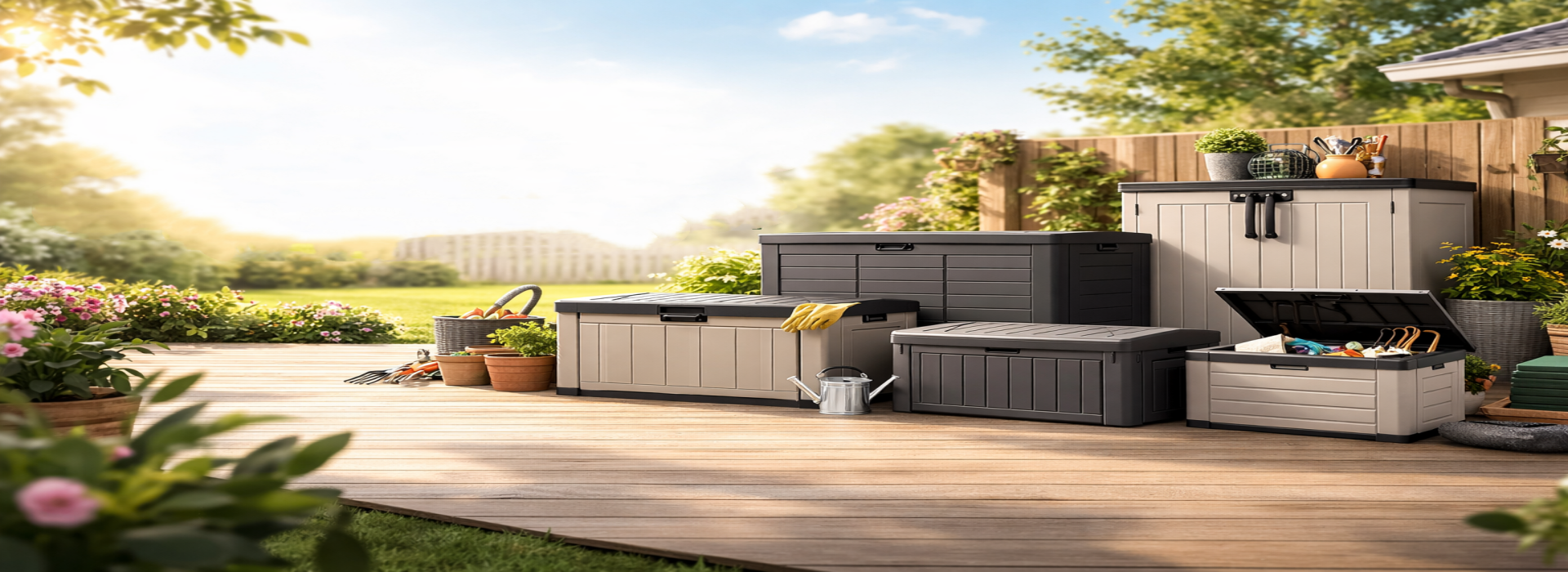
HDPE (High-density polyethylene) wood-plastic composite (WPC) storage boxes have seen continuous demand growth in the European and American markets in recent years. Their main advantages are UV resistance, colorfastness, waterproofing, moisture resistance, and virtually maintenance-free operation, making them ideal for long-term outdoor use in environments such as swimming pools, gardens, beachfront villas, and hotel projects. For cross-border e-commerce sellers and wholesale customers exporting in bulk, these products offer low return rates and high durability, effectively reducing returns and after-sales issues.
Resin Outdoor Storage Box
Resin Garden Storage are one of the most common types in the mass market, characterized by their lightweight, durability, weather resistance, and affordability. For buyers targeting large retail channels, online platforms, or home furnishing chain stores, resin storage boxes offer significant advantages in terms of transportation costs, container capacity, and market acceptance, making them ideal for high-volume product lines and mainstream consumer markets.
Wooden Outdoor Storage Box
Wooden storage boxes, on the other hand, are geared towards the high-end garden furniture market. Their natural grain gives them a sophisticated look, and they are typically finished with paint or wood wax oil to enhance water resistance and weather resistance. While these products require regular maintenance, resulting in higher maintenance costs, they offer a clear advantage in brand positioning and product premium, making them suitable for home furnishing brands, garden lifestyle brands, or boutique retail channels that emphasize design and brand differentiation.
Metal Outdoor Storage Box
Metal storage boxes prioritize structural strength and security. Their durability, lockability, and anti-theft features make them widely used in public spaces, property management, commercial locations, and project engineering, such as community gardens, commercial terraces, schools, or government projects. For project buyers or long-term commercial project clients, metal storage boxes meet the needs of high-intensity use and secure storage, making them a common choice in project-based procurement.

How to Choose the Right Outdoor Storage Box Size
Recommending the appropriate storage box size is a crucial step for wholesalers, brand buyers, and project clients when selecting products. Different sizes not only determine the product’s usage scenario but also directly influence the end customer’s purchasing decision. Therefore, when choosing the size of an outdoor storage box, it is usually necessary to consider several aspects, including usage needs, spatial environment, product capacity, and transportation efficiency.
First, determine the size based on the intended use and capacity requirements. Different home or commercial settings have significantly different storage space needs. For example, small storage boxes (approximately 25–100L) are typically used to store gardening tools, cushions, toys, or small accessories, suitable for balconies, terraces, or small garden spaces; medium-sized storage boxes (approximately 150–200L) are the most common size on the market and can store outdoor cushions, folding chairs, gardening supplies, etc., suitable for most home gardens or patios; while large storage boxes (350–400L and above) are more suitable for storing large cushions, pool supplies, outdoor furniture accessories, etc., and are commonly found in villa patios, pool areas, or commercial projects.
Secondly, the size of the space needed for placement must be considered. In areas with limited space, such as family gardens, terraces, or poolside areas, overly large storage boxes may affect the overall flow and visual appeal, making compact designs more popular. In hotels, resorts, commercial gardens, or public recreational areas, large-capacity storage boxes are more practical, allowing for the centralized storage of cushions, towels, or activity supplies, improving space management efficiency.


Design Features of Outdoor Storage Boxes
Outdoor storage boxes are designed not only to meet basic storage functions but also to adapt to the complex and ever-changing outdoor environment. Materials with strong weather resistance, such as high-density polyethylene or powder-coated metal, are chosen to withstand various weather conditions without deformation or fading. Therefore, they incorporate a series of design features specifically optimized for outdoor scenarios in terms of structure, materials, and user experience. Furthermore, the lid must be easy to open and close, ideally using hinges, ensuring smooth operation even after prolonged exposure to the outdoors.
Since the product is constantly exposed to sunlight, rain, and humidity, outdoor storage boxes typically use materials with UV resistance and water resistance, such as HDPE wood-plastic composites, resin, or corrosion-resistant metal structures. Adding a UV protection layer or surface coating effectively reduces fading, cracking, and material aging, thus extending the product’s lifespan. Stable structure and load-bearing design are also important features of outdoor storage boxes. Many outdoor storage boxes not only store items but also function as seats or benches, therefore, their structural design must have sufficient load-bearing capacity. For example, by strengthening the internal support structure, adding reinforcing ribs, or using a metal frame, storage boxes can remain stable under heavy loads, preventing deformation or collapse. This multi-functional design is particularly popular in the European and American home garden market.
Waterproof and ventilated structural design is also key to enhancing product practicality. Outdoor storage boxes typically feature waterproof lids with a sealing design to prevent rainwater infiltration, protecting stored cushions, gardening tools, or other items from moisture and mold. Easy-opening design is also an important function of outdoor storage boxes. For example, a pneumatic lever with a soft-close lid makes opening and closing the lid easier and safer, preventing injury from sudden drops. Some products also support locking mechanisms, allowing users to store more valuable gardening tools or outdoor equipment, enhancing security.
Easy-to-assemble design is increasingly valued by customers. Many outdoor storage boxes adopt a detachable structure and flat-pack design, which not only significantly reduces transportation volume but also improves loading efficiency and reduces logistics costs. Overall, outdoor storage boxes typically combine weather-resistant materials, a robust structure, waterproof and ventilated design, safety features, and easy installation. These designs not only enhance the practicality and durability of products, but also help wholesalers and brand clients build more competitive product lines in the market.
Maintenance and Care of Outdoor Storage Boxes
Outdoor storage boxes are constantly exposed to sun and rain. Proper maintenance not only extends their lifespan but also keeps them looking clean, reducing replacement frequency. Regular cleaning is the most basic maintenance method. Most outdoor storage box surfaces can be wiped with a soft cloth or sponge and water; a simple rinse with water is enough to restore their appearance, making maintenance very low-cost. Maintaining good drainage and ventilation is also crucial. It is recommended to avoid water accumulating on the top of the box for extended periods and to keep the bottom dry. Inspecting hardware and connecting parts is also an important part of maintenance. For storage boxes with gas springs, hinges, or latches, it is recommended to regularly check for loose screws and ensure smooth opening and closing.
Different materials used in outdoor storage boxes require different maintenance methods. For example, HDPE or resin storage boxes typically have strong UV resistance and water resistance, requiring virtually no additional maintenance. Wooden storage boxes are recommended to be regularly coated with wood wax oil or protective varnish to maintain the wood’s water resistance and crack resistance. Metal storage boxes should have their surface coating checked regularly to prevent rust caused by scratches. In seasonal use scenarios, proper storage methods can also help extend the lifespan of your storage box. For example, during winter or when not in use for extended periods, clean and dry the box, and place it in a sheltered location, or use a protective cover for simple protection.
Finally, pay attention to the items stored inside the storage box. Ensure all items are dry and clean before placing them inside. Damp or dirty items are prone to mold and odors, which can seep into the storage box over time. By following these maintenance tips, your outdoor storage box will remain aesthetically pleasing and function efficiently for years to come.


Summary
As outdoor living spaces become essential to modern life, a well-designed storage box does more than organize—it protects items from the elements and enhances the entire environment. From family gardens to commercial patios, this versatile product meets diverse needs with stable, year-round demand. For distributors and brands, it’s a core category worth investing in. AI-Cathlon is your trusted manufacturing partner—delivering solid quality, flexible customization, and a mature supply chain to help you and your customers thrive in the growing outdoor market.